Thank you for these clarifications. Here is an introduction that meets your expectations.
Long reserved for religious ceremonies, this bread has traversed the ages without ever conforming to classic baking standards. Its shaping does not adhere to any universal codification, oscillating between oral transmission and stubborn family variations.
The Catholic Church has shaped its uses, but Antillean society has constantly reinterpreted the recipe according to the economic and social imperatives of each generation. This history sheds light on unexpected cultural issues behind an apparent simplicity.
A bread like no other: what distinguishes Antillean butter bread
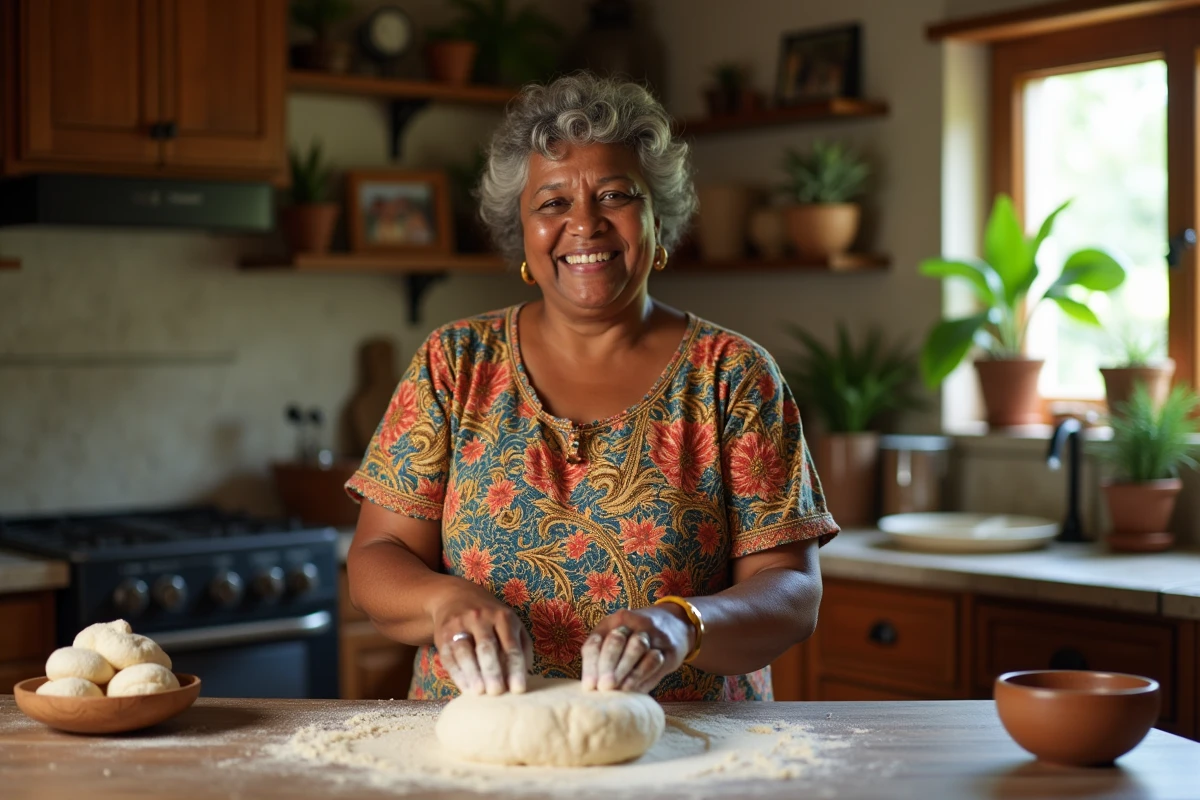
The Antillean butter bread never goes unnoticed. Its soft, generous crumb, its bold flavor, and its sweetness invite tasting, far from the more austere standards of European traditional breads. The process is methodical: flour, margarine, sugar, salt, all harmoniously mixed in the bowl. The recipe relies on a degree of precision but does not prohibit a touch of intuition passed down from mother to daughter.
Then comes the moment for the yeast, dissolved in warm milk, integrated into the dough before a thorough and regular kneading. The eggs make their entrance, added one by one to structure the dough, which may end up needing a few extra handfuls of flour. Everything then rests on patience: hours of rising in a warm corner, allowing the texture to become airy.
When the dough shows signs of good fermentation, it is divided into three, each piece rolled into a log and then braided with care. The last step is to carefully brush the braid with a mixture of egg yolk and liquid vanilla to make it shine when it comes out of the oven. The reward is that golden crust and the aroma that fills the house.
Much more than a brioche, this bread brings people together during key moments, highlights moments of pride, and accompanies each generation that adds its touch, its memory, to this specialty inseparable from Creole life.
Where does butter bread come from? A dive into an unknown history
When looking into the origin of Antillean butter bread, it is impossible to ignore the long journey of this iconic brioche. Born from the meeting of techniques from France and adaptation to the realities of the Antilles, margarine replacing butter, local flavors, the recipe retains a scent of family adventure stronger than any written codification.
The ritual of mixing, the yeast painstakingly acquired, the patience of fermentation: all precise gestures that reflect both necessity and attachment to tradition. Over generations, citrus zest or a pinch of cinnamon come to signify a connection to the Creole terroir. This braided bread ultimately embodies cultural blending, the meeting of African, European, and Caribbean worlds in Antillean cuisine. Each loaf carries the memory of family commemorations, the patience of vigils, the warmth of reunions.
Rituals, celebrations, and sharing: the traditions that perpetuate butter bread in the Antilles
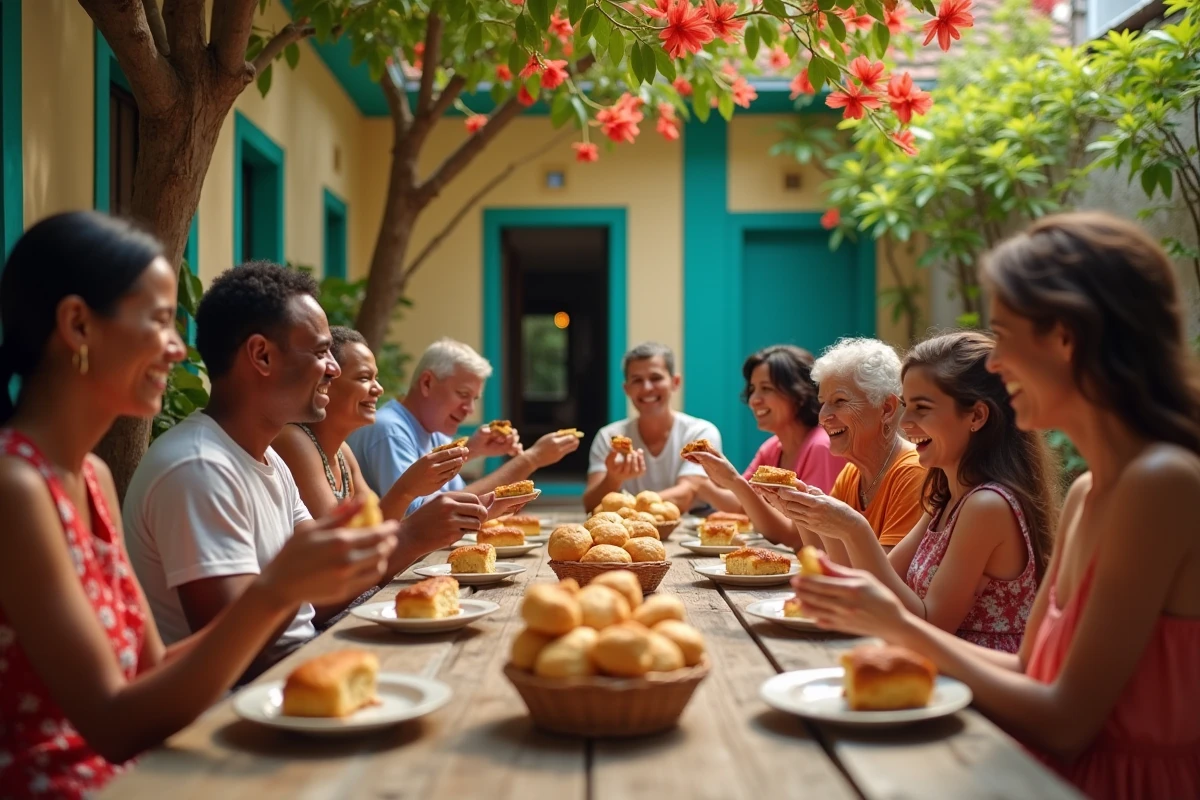
Antillean butter bread is integral to celebrations, solemn moments, and shared joys. Its preparation inspires respect through the meticulousness of the gesture, the seriousness attached to each step. It is not made casually.
To better understand this alchemy, here are the essential steps of the family ritual:
- Once the dough is finished, it is shaped into a ball and left to rest in a warm atmosphere.
- It is left for two to three hours to allow the yeast to do its work and give the bread its unique softness.
The shaping moment unites young and old around the table:
- The dough is cut into three pieces, rolled into long logs, and then braided with rigor and poetry.
- This braiding symbolizes both the bond between generations and the solidarity inherent in Antillean culture.
Everything is ready for baking: the braid goes on the tray, receives a generous layer of egg yolk and vanilla, and then bakes at 180°C until it presents a brilliant crust, a promise of sharing.
Butter bread graces tables during baptisms, communions, weddings, or funeral vigils, always accompanied by shared hot chocolate. Each piece distributed perpetuates this collective gesture that connects families, spans decades, and shapes the heart of Creole identity. The recipe evolves, is passed down, as if to remind us that tradition here does not age: it simply continues to bring people together, each time a butter bread comes out of the oven.