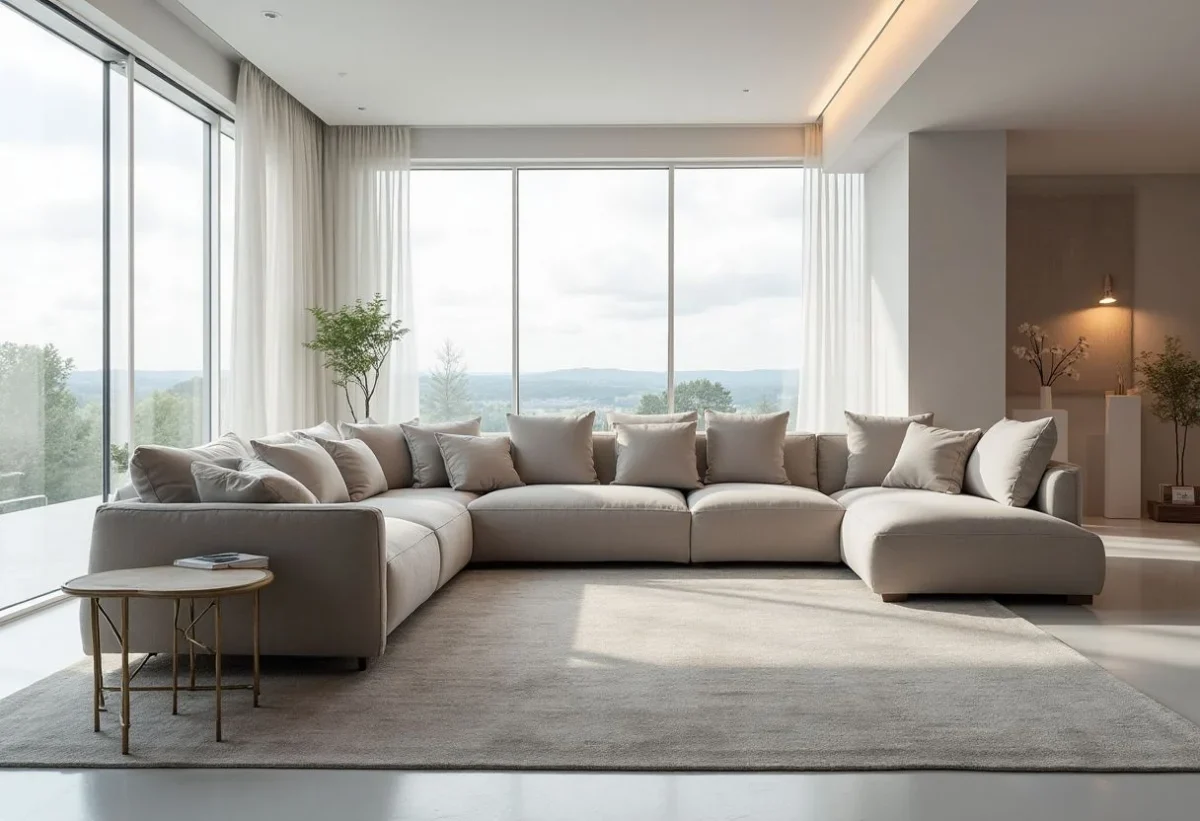
The sofa, this central element of our living rooms, stands as the undisputed king of furniture. This piece of furniture, which welcomes us with open arms for moments of relaxation, lively discussions, or impromptu naps, is much more than just a functional object. It tells a story, that of its evolution over the centuries, its various styles, and the diverse materials used in its making. Through its shapes and textures, it reflects both our personal tastes and the trends of society.
A rich and varied history
Since antiquity, the sofa has managed to carve out a prominent place in homes. Its history is marked by impressive stylistic and functional evolutions.
The earliest traces of this piece of furniture date back to ancient Egypt, where it was a symbol of social status. The Egyptians, known for their love of comfort and luxury, used rudimentary versions made of wood and fabrics. Over time, other civilizations adopted and adapted the sofa. In Greece, it was often associated with symposiums, those gatherings where philosophers and other thinkers exchanged ideas on various subjects.
- During the Renaissance, the sofa became a luxury item in Europe. Royal courts adopted it, particularly in France, where it took on a more ornate and refined style.
- In the 19th century, the Victorian era saw the emergence of more cushioned and comfortable models, reflecting the evolution of manufacturing techniques and the taste for domestic comfort.
- The 20th century marked a turning point with the introduction of new materials such as leather and synthetics, offering greater durability and diversity in designs.
Contemporary styles and designs
In the modern world, the sofa comes in a multitude of styles and designs, catering to the varied tastes and needs of consumers.
The Scandinavian style, for example, emphasizes simplicity and functionality. Using neutral colors and natural materials, it easily integrates into various types of interiors. In contrast, the industrial style favors raw materials like metal and leather, creating an urban and modern ambiance.
- Modular sofas are a strong trend, offering unparalleled flexibility. They allow for reorganization of space according to occasions and needs.
- The resurgence of vintage makes us rediscover shapes and colors from past decades. Sometimes reinterpreted, these models bring a touch of nostalgia to our interiors.
- Technological innovations are also present, with sofas equipped with USB ports, integrated sound systems, or even massage features.
Materials and manufacturing techniques
The manufacturing of a Sofa is a complex process that involves a variety of materials and techniques, each with its own advantages.
Wood remains a traditional choice for the structure, offering robustness and longevity. For the upholstery, fabric and leather are the most commonly used materials. Each material brings a different aesthetic and comfort. Velvet, for example, adds a touch of elegance and softness, while leather offers a more luxurious look and is particularly durable.
Modern manufacturing techniques further enhance the quality and durability of sofas. From high-density foam for seating to pocket springs for support, each element is designed to optimize comfort.
Artisans and manufacturers constantly strive to innovate, using cutting-edge technologies and exploring new materials to meet the growing demands for comfort and durability from consumers.