Which budget items for weddings actually absorb the gains from an intimate format, and where are the most profitable trade-offs between personalization and eco-responsible approaches? Data collected in 2024 by specialized French platforms outlines a profile of couples that no longer resembles that of five years ago: fewer guests, a higher budget per attendee, and new demands for digital content delivered the day after the ceremony.
Intimate wedding budget versus large format: where does the difference go
The shift towards weddings with fewer than 80 guests, documented by Mariages.net and Maison du Mariage since 2023, redistributes budget lines. The catering item remains the largest expense, but the budget per guest significantly increases when the guest list tightens.
| Item | Large wedding (150+ guests) | Intimate wedding (fewer than 80 guests) |
|---|---|---|
| Catering / meal | Dominant part of the budget, standardized menu | Higher budget per guest, local and seasonal cuisine |
| Venue | Large hall, decoration to be created | Already decorated venue, fewer single-use purchases |
| Decoration | Large volume, often disposable | Carefully designed scenography, easier reuse |
| Photo / video | Classic photographer + videographer | Photographer + wedding content creator (reels, stories) |
| Stationery | Printed invitations for the entire list | Digital invitations, wedding website |
This table highlights a simple mechanism: reducing the guest list frees up budget for the quality of each item. Couples who go below the 80 guest mark do not necessarily spend less overall, but they redirect funds towards the experience of each person present.
Several service providers surveyed by the platforms note that this logic naturally favors eco-responsible choices, as a smaller format generates less waste, less transportation, and less food surplus. On the universmariage.com website for weddings, provider profiles allow filtering by local or seasonal commitment, facilitating this type of trade-off from the selection phase.
Eco-responsible wedding and personalization: compatible items
The idea that an eco-conscious wedding would be a budget wedding does not hold up against the analysis of practices documented in the 2024 report by Ysé Events. Couples who seek committed caterers with local and seasonal cuisine are not looking to cut back on gastronomy. They want a menu that tells a story, rooted in a region, sometimes flexitarian.
Three items lend themselves particularly well to the dual requirement of personalization and sobriety:
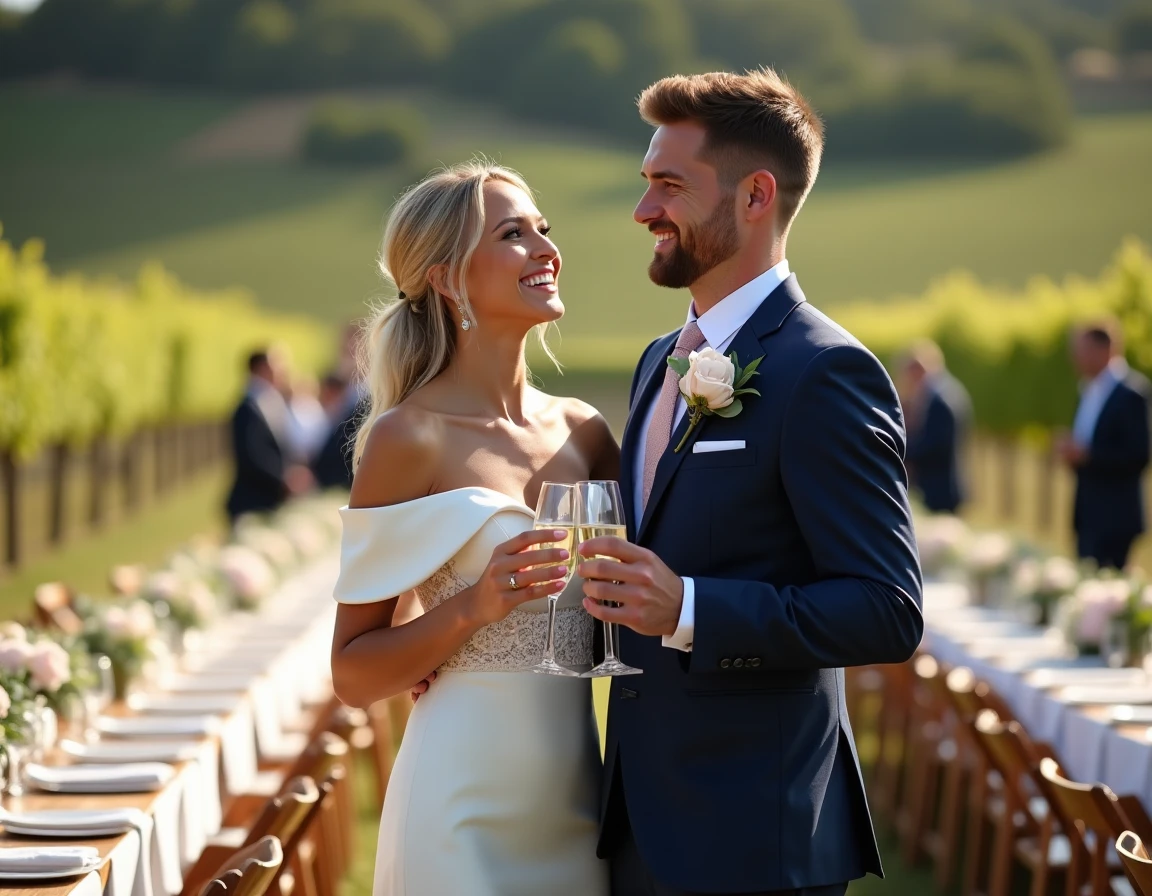
- The venue: choosing a site that is already decorated (vineyard, botanical garden, restored farmhouse) eliminates the need to purchase single-use decorations, while offering a unique setting that guests won’t find anywhere else.
- Stationery: switching to digital invitations and a wedding website reduces paper consumption without sacrificing design, as online creation tools now allow for advanced graphic personalization.
- The menu: a short, seasonal, and local menu often costs less in logistics than an international buffet, and it offers superior taste coherence, especially when the caterer works with producers close to the venue.
On the other hand, the floral item remains a point of tension. Dried flowers or wild arrangements limit the footprint, but their unit cost can exceed that of classic compositions when demand exceeds local supply.
Wedding content creator: a new budget item to consider
The 2024 survey by Mariages.net among French service providers confirms a shift in couples’ visual expectations. Classic photographers and videographers are no longer sufficient: a wedding content creator dedicated to social media is now booked by an increasing number of couples, with a specific deliverable (reels, stories, vertical editing) expected within 48 hours.
This item did not exist three years ago. It adds to the image budget without replacing traditional services, creating a direct trade-off with other lines.
What this item changes in budget allocation
“Social media ready” content meets an immediate sharing need that classic photo reporting (delivered several weeks later) does not cover. For an intimate wedding, the relative cost of this provider weighs more heavily, as the number of guests does not reduce the volume of necessary capture.
Couples who wish to remain within an eco-responsible logic may see an indirect advantage: digital content partially replaces the printed photo album and paper prints distributed to loved ones. The material balance lightens, even if the budget balance becomes heavier.
Sober wedding decoration: choices that last
The trend towards careful scenography rather than decorative accumulation changes the relationship to the venue. A property with strong architecture, well-managed natural light, or a structured garden requires few additions. Couples who invest in the venue rather than in brought-in decoration often find that the photographic result is better because the ambiance is coherent from floor to ceiling.
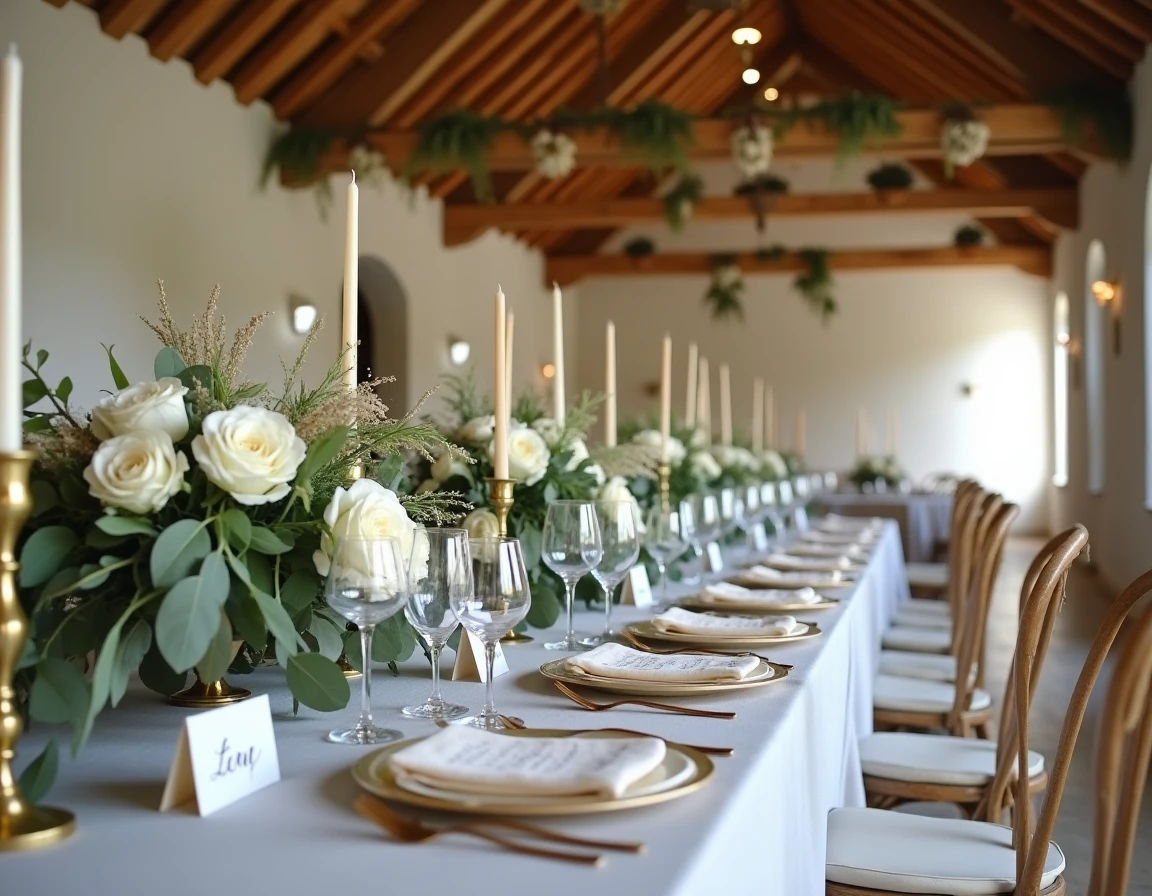
The report from Ysé Events notes that already decorated venues reduce purchases of single-use decor, aligning aesthetic constraints with ecological constraints without visible compromise for guests. The table itself gains in clarity: fewer cumbersome centerpieces, more carefully chosen tableware, lighting designed for both the ceremony and the evening.
The most reliable criterion for evaluating the durability of a decorative choice remains its reusability. A linen tablecloth, a brass chandelier, or a stoneware vase can be lent, resold, or kept. A floral foam arch ends up in the landfill on Monday morning.