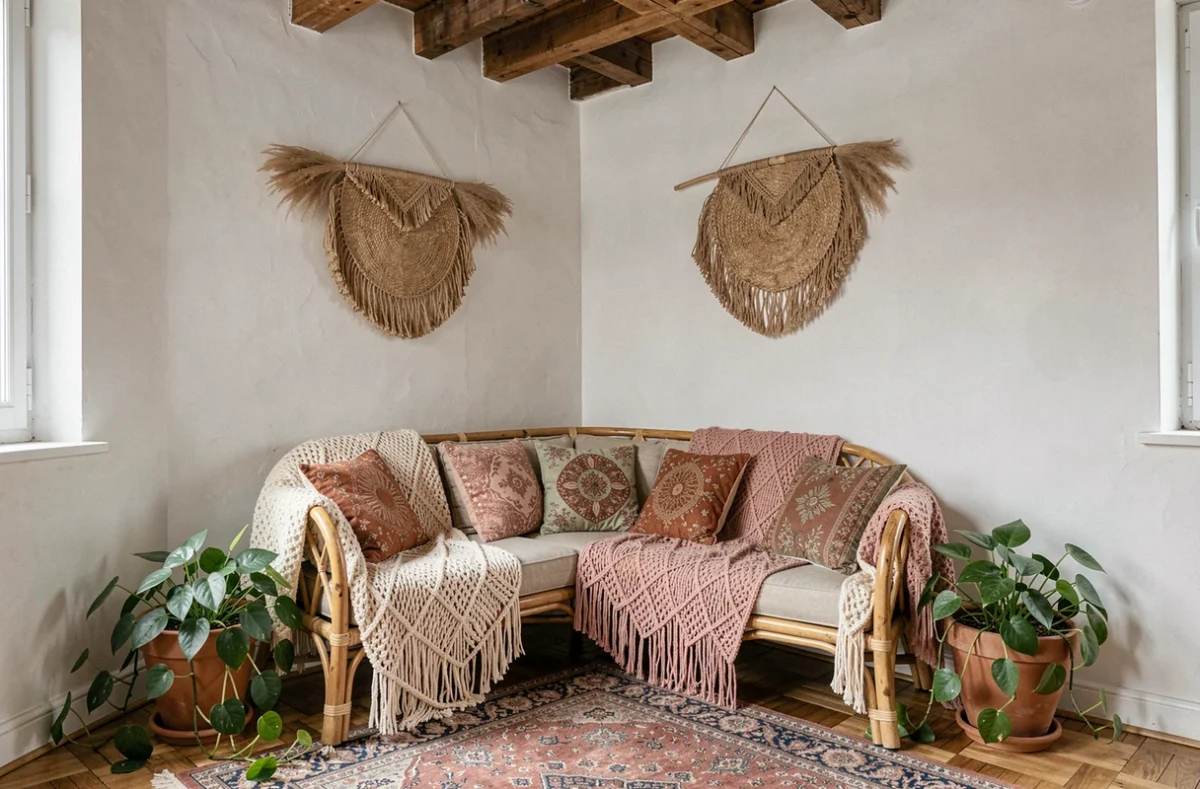
Boho chic style is built on a mix of natural materials, warm colors and objects with personal meaning. In recent seasons, the trend has moved away from very neutral interiors and back toward floral patterns, dark woods and rich colors, as interior designer Lia Vidal described in an interview published by Vozpópuli in November 2026.
For a successful boho chic look, this shift changes the game: it makes it possible to embrace bolder choices without letting things become cluttered.
Repair and thrift before you buy: the foundation of sustainable boho decor
Most home decor guides list categories of items to buy. The problem is that a boho chic interior doesn’t come together in a single bulk order. Boho style draws its strength from pieces with a story, not from a shopping cart full of furniture from a website.
ADEME recorded an increase in repairs between 2020 and 2024 in the panel it studies. A thrifted armchair reupholstered in kilim fabric, a raw wood frame sanded and waxed, a chipped vase repurposed as a planter: these projects contribute far more to a bohemian look than a new purchase designed to look vintage.
Before trying to create a successful boho chic look by adding more and more pieces, it’s better to take stock of what you already own. A wool throw forgotten in a closet, an antique mirror relegated to the garage, a tarnished copper tray: each of these objects can become a focal point once cleaned, repositioned or paired with a contrasting textile.
Natural materials and boho chic furniture: what the EPR scheme means for consumers
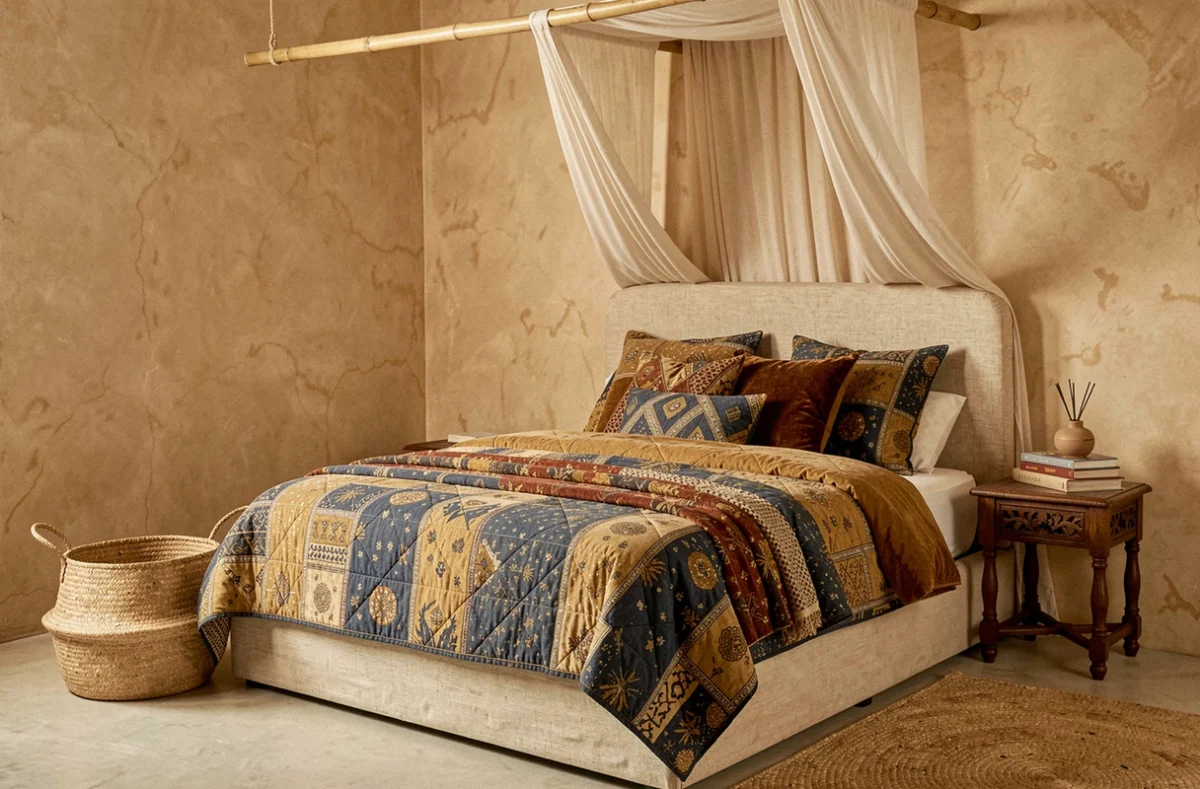
Boho chic style favors rattan, solid wood, linen, jute and terracotta. These materials create a warm atmosphere with little effort. Their texture alone adds visual interest to a space, whereas a white melamine piece of furniture needs accessories to stand out.
One point rarely covered in home decor articles: the EPR (Extended Producer Responsibility) scheme now requires manufacturers of new furniture, upholstered seating and textile decor items to provide information about a product’s recycled content and recyclability. It’s not a quality label, but it is a practical reference when comparing two rattan armchairs or two jute rugs.
For a boho living room, this means you can check the product details before buying new furniture and choose a secondhand piece if the new item’s recyclability information is unclear. Buying secondhand doesn’t mean you can skip checking the materials, but it reduces the impact and adds authenticity to the decor.
Which materials to prioritize
- Raw or dark-stained wood, which adds depth without making a room feel heavy—especially in a small space, where white furniture can end up blending into the walls.
- Linen and heavyweight cotton for textiles (cushions, curtains, bed throws): their relaxed drape is part of the boho charm, and they age better than polyester.
- Rattan or wicker for one or two statement pieces (an armchair, pendant light or mirror), not all the furniture, or the room may end up looking like a basket shop.
- Terracotta and stoneware for decorative objects such as vases, dishes and candleholders. Their visual weight grounds the room.
Boho chic decor in a small space: light, plants and restraint
A studio or one-bedroom apartment leaves little room for clutter. Boho chic works well in these spaces as long as you follow one simple rule: every object should earn its place through its function or the light it receives.
In practical terms, a cushion placed in a dark corner serves neither comfort nor aesthetics. A mirror placed opposite a window, on the other hand, doubles the natural light and makes the room look bigger. Choices like these are what distinguish a well-curated boho interior from a colorful jumble.
Houseplants: choose according to the actual light levels
Plants are a cornerstone of boho decor. However, specialist guides distinguish between live, dried and artificial plants according to the room’s light levels. In a north-facing bedroom with little direct sunlight, a pothos or snake plant will thrive, but a fiddle-leaf fig will struggle within a few months.
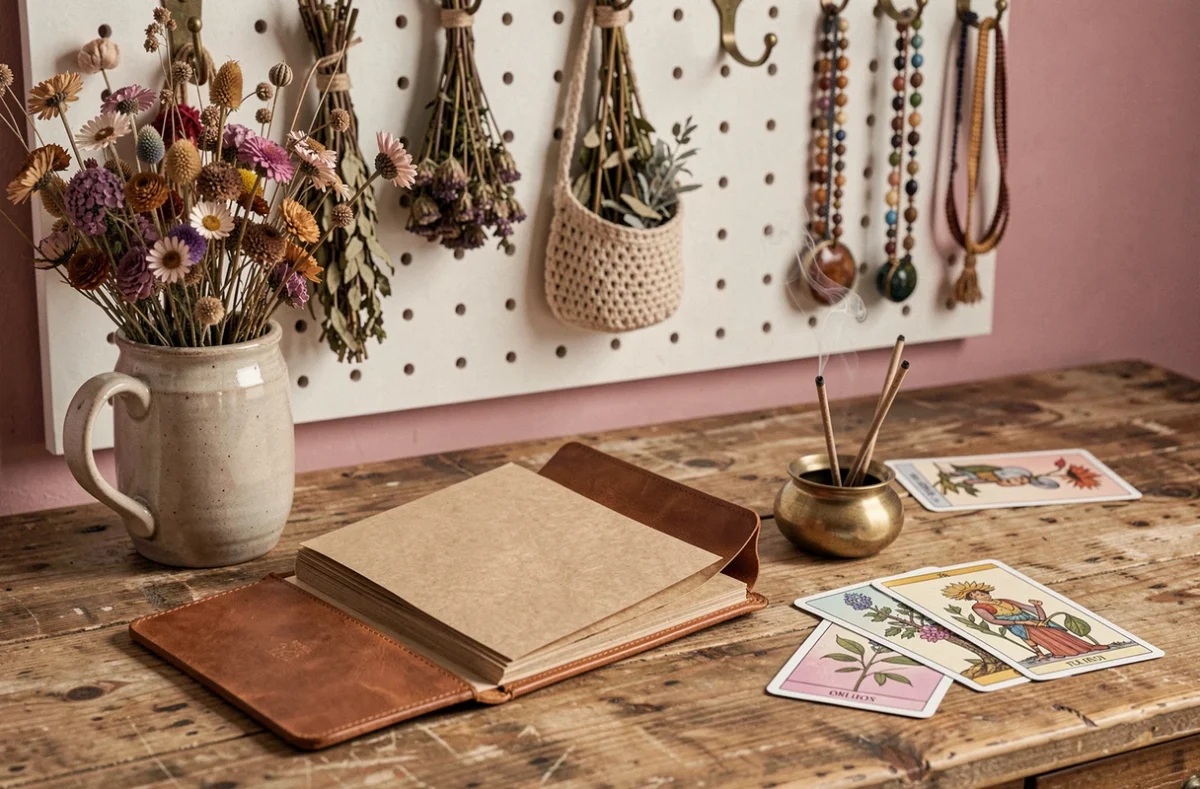
Dried plants (pampas grass, eucalyptus and thistles) work well in dark rooms and require no maintenance. They add volume without taking up floor space, especially when hung or placed up high. In a small space, it’s better to have three well-placed plants than a dozen pots on the floor blocking the way.
Boho colors and patterns: add variety without making everything match
The classic boho chic palette centers on terracotta, beige, sage green, mustard and off-white. These warm colors create the desired atmosphere, but the pitfall is using them all at once in the same room.
A more effective approach is to choose two dominant colors and one accent. For example, off-white walls, dark wood furniture and a terracotta textile as a focal point (a cushion, rug or curtain). Keep everything else neutral. This restrained color scheme lets the ethnic or geometric patterns you introduce in small doses breathe.
Interior designer Lia Vidal also points out that floral prints and dark woods are making a strong comeback, but as carefully chosen accents rather than all-over features. A floral textile on a thrifted armchair, a patterned throw on a plain sofa: one bold pattern per visual area is enough to add character without overwhelming the space.
Boho chic style isn’t just a shopping list. It comes together as much through subtraction as addition: keep what matters, repair what’s worth saving, and resist the urge to fill every surface. A warm, inviting interior often comes down to three well-chosen objects rather than thirty accessories bought in a set.