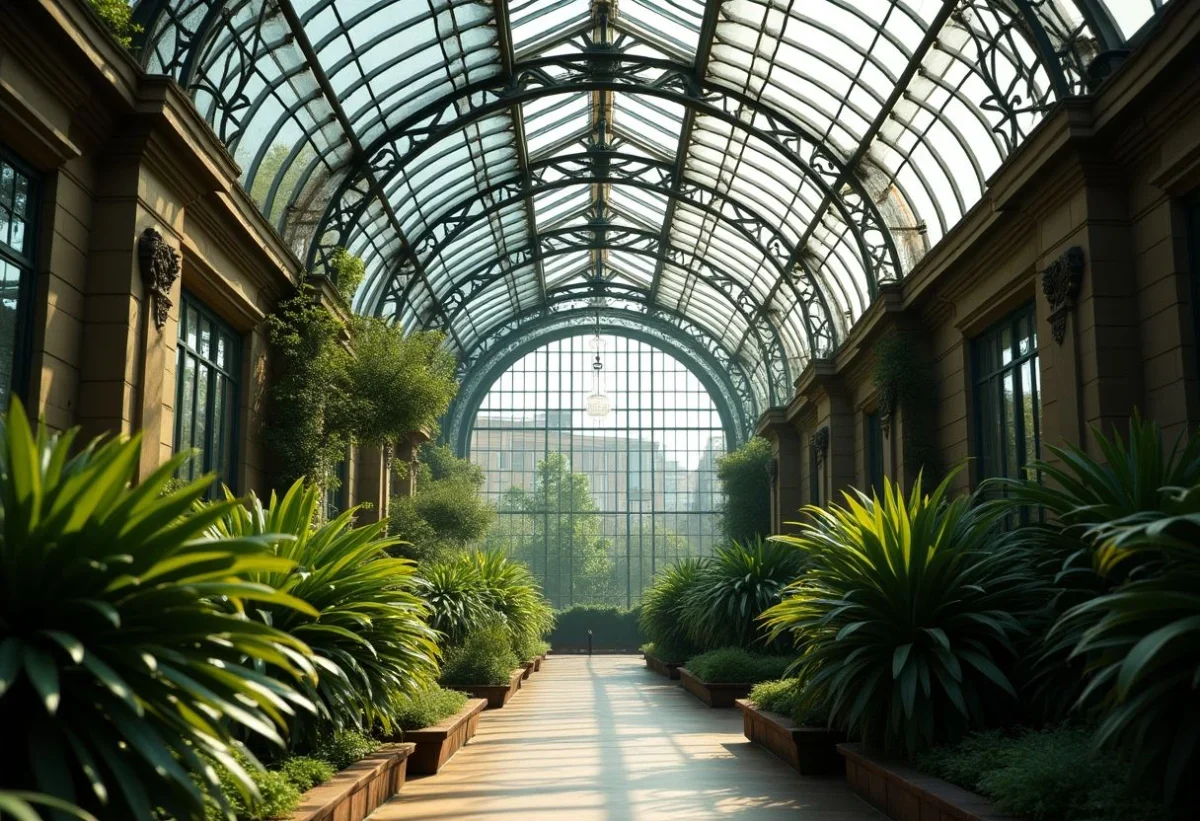
For several years, the glass partition has established itself as an essential element in the field of interior decoration. It is no longer just a simple device for separating two rooms, but also a true design object that combines functionality and aesthetics. Blending wrought iron with the elegance of glass, it brings an industrial and modern touch to any space. Offering an unparalleled passage of light while highlighting perspectives, it can transform a dark room into a true luminous haven. As living spaces become increasingly precious, the glass partition stands out as the ideal solution for creating open and bright areas without compromising intimacy.
The origins and evolution of the glass partition
The glass partition is not a recent innovation; it has its roots in the architecture of artists’ studios and greenhouses from the 19th century.
- Historical origins: Initially, it was valued for its ability to maximize natural light, essential for artists and gardeners who needed maximum brightness to work or for plant growth.
- Industrial revolution: With industrialization, the glass partition found its place in factories and warehouses, where it served to illuminate vast workspaces.
- Integration into homes: Gradually, it was integrated into houses and apartments, first for practical reasons, then as a decorative element.
- Modern renaissance: Today, it is making a strong comeback, adapting to all styles, from the most rustic to the most contemporary.
The different types of glass partitions
When discussing the glass partition, there is a wide variety of styles and types that can meet various needs and aesthetics.
Interior glass partitions: Primarily used to separate spaces while maintaining an open view, they come in several models, from fixed to sliding.
Exterior glass partitions: Often used to create bright extensions, such as verandas, they allow you to enjoy the sky while being sheltered from the elements.
Materials and finishes: Glass remains the central element, but the choice of frame can vary between aluminum, steel, or wood, each bringing a unique and personal touch. Finishes can range from matte, glossy, or even frosted glass for added privacy.
The advantages of the glass partition
Today, the glass partition is valued not only for its visual appeal but also for its numerous practical advantages.
- Natural light: It maximizes natural light, creating bright and pleasant living spaces.
- Delimitation without partitioning: It allows for the division of spaces without enclosing them, thus preserving the fluidity of movement.
- Partial sound insulation: Although primarily aesthetic, it offers some sound insulation, ideal for separating living and working spaces.
- Aesthetics and modernity: With its clean lines and various finishes, it adapts to all styles, from the most industrial to the most classic.
How to integrate a glass partition into your interior?
Integrating a glass partition into an interior requires some planning. Here are a few tips to achieve this effectively.
First, it is essential to determine the intended use: is it to separate a kitchen from a living room, or to create a bright office? Once the objective is defined, it is important to choose the glass partition that aligns with your aesthetic and functional aspirations.
The dimensions must be carefully calculated to ensure it integrates harmoniously into the desired space.
Finally, installation can be carried out by a professional to ensure an optimal result, although seasoned DIY enthusiasts may tackle it themselves with the appropriate tools and materials.