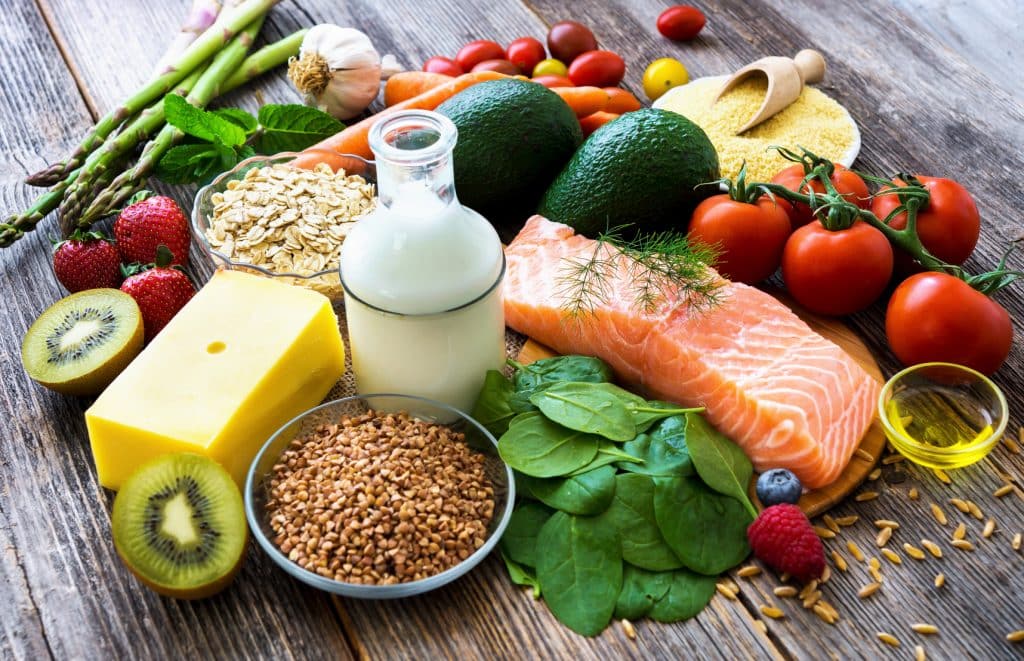
Food preservation is a set of processing methods that allow for the retention of taste properties (some add flavor, especially those requiring an additive) and nutritional qualities, as well as the texture and color characteristics of food products. I would like to make a small remark; there must be an error in the timelines of “tomorrow and 3 days for raw and cooked meat” as this can be a significant concern for some people.
There are methods based on several techniques: preservation by heat or cold, but also atmosphere modification, water removal, or acidification. Disadvantages: the slight acidic taste (typically that of raw sauerkraut) may not appeal to everyone, and the process is only applicable to vegetables. Freeze-drying produces quality products that rehydrate properly, but remains expensive, and is therefore reserved for certain applications such as instant coffee, some instant soups, and food for people in extreme conditions (astronauts, mountaineers…).
To cope with periods of abundance, when harvests and foraging are generous, and thus avoid waste while allowing the possibility of including beans, porcini mushrooms, cherries, or strawberries later in the year, preservation is almost a mandatory step. The person behind the site must have a lot of experience and understand the parameters that ensure the safety of canning (acidity, preparation time, jar size, quantities, etc.). To avoid food waste, it is possible to work on several fronts: buying in more reasonable and economical quantities, learning to recognize the true expiration dates of food, and also knowing how to preserve food for longer.
Depending on the degree of salting and/or smoking, products can be stored at room temperature (dry ham, herring…) or in positive cold (smoked salmon, ham…), for a few weeks to several months. This is not the easiest preservation method to implement at home, and the shelf life of products obtained with domestic means is limited (drying is generally imperfect), but dehydration is a rather appealing preservation method. Note: high-temperature short-time thermal treatments promote good preservation of fibers, nutrients, and particularly heat-sensitive vitamins (e.g., vitamins A, B1, C).
Workshops are always announced in our Buy Processed Products. The delicious preserves prepared by the food preservation coordination and the team of volunteers are offered at the Roulant general store 6 days a week. Disadvantages: optimal drying is not easy to achieve in certain climates, the need to monitor food after drying, difficulty in subsequently preserving products from ambient humidity. For further information, refer to the applicable texts or contact a departmental directorate for population protection (DDPP) or a departmental directorate for social cohesion and population protection (DDCSPP). Frozen at -18°C, food can be preserved for several months (for a 3-star freezer), without any change in appearance, and without the microorganisms present being able to develop.
In recent years, the Roulant food preservation program has gained momentum, particularly thanks to the preservation of surplus from the Roulant farm, urban gardens, and local fruit foraging.
Salt, sugar, and oil have the same goal: to create an environment unfavorable to the development of bacteria, molds, and other germs by reducing what is called water activity (=Aw). These solutions, which allow for a gentler, sometimes more effective treatment of products while preserving their taste and nutritional properties, are rarely applied for industrial, regulatory, and economic reasons. The person behind the site must have a lot of experience and understand the parameters that ensure the safety of canning (acidity, preparation time, jar size, quantities, etc.).
Canned goods are widely consumed products, easy to use, easy to store (no temperature constraints), covering a wide range of foodstuffs (vegetables, fruits, meats, fish, prepared dishes…).
For centuries, preservation processes have been a craft, whether in the family home or in canneries: depending on the climate of the regions, the first methods used are drying, smoking, or freezing for groups living near glaciers or frozen water bodies in winter. Here are a few: Canning for a New Generation, Preserving by the Pint: Quick Seasonal Canning for Small Spaces, Preservation Society Home Preserves & the Bernardin Complete Book of Home Preserving. In all cases, the conditions of preservation also matter: depending on the food, vitamins, proteins, carbohydrates, etc., will be more or less preserved depending on whether it has been stored in a cool, dry place, protected from air, light, and invertebrates, etc., under the best conditions. Most foods require, for effective preservation, a step of controlling their biochemistries, which concerns meats, fish, fruits and vegetables, as well as dairy products: it is about preventing the development of bacteria, fungi, and other microorganisms, and delaying their rancidity and autolysis.
Preserving Food
5. Shelf Life of Foods
Good evening, I preserve soups, ratatouille, and compote for several weeks: After cooking, I transfer my very hot (see boiling) preparation into glass jars with screw lids, I turn them upside down, and after cooling, into the fridge they go. However, heat-sensitive nutrients like certain vitamins can be partially destroyed: for some products (dry breakfasts), supplementation allows for a rebalancing.
This method of preservation is now very common in developed countries, due to its practicality and the wide variety of available products (fruits, vegetables, meats, fish, prepared dishes, bakery and pastry…).
For liquid foods like milk, heating can be done by passing through a stream of superheated steam (+140-150°C) for a few seconds (2 to 5 seconds), followed by immediate cooling (+3°C) under vacuum. Canning has evolved in recent decades towards high-temperature/short-time thermal treatments that allow for good preservation of fibers (Table 1), nutrients (Table 2), and particularly heat-sensitive vitamins like vitamin C. These solutions, which allow for a gentler, sometimes more effective treatment of products while preserving their taste and nutritional properties, are rarely applied for industrial, regulatory, and economic reasons. Preserving food remains a necessity for individuals to have qualitative and quantitative nutritional intakes that meet their daily needs while offering flexibility in food logistics.
Disadvantages: the original taste and texture of foods are altered, as is the dietary quality (which is not very in line with the current discourse: do not eat too fatty, too salty, too sweet). Strawberries, onions, garlic, shallots, cereal flakes and sprouts for dairy products, dried vegetables and fruits, rice flour, gum arabic, poultry meat and mechanically separated poultry offal, frozen frog legs, dried blood, plasmas, coagulants, peeled or headless frozen shrimp, liquid egg whites (dehydrated or frozen),.
It is indeed necessary to avoid unpacking it from its packaging (whether it comes from the butcher or is vacuum-packed), place it in the coldest part of the fridge, and not stack meats on top of each other so they can breathe. They can result from physical and/or chemical alterations, enzymatic (hydrolysis of banana starch into simple carbohydrates, for example), degradation due to chemical reactions (Maillard reaction or non-enzymatic browning, oxidation of unsaturated fatty acids, vitamins…).
Advantages: long shelf life of the product (if canning is done under good conditions), storage of canned goods at room temperature, thus saving energy, relative preservation of the taste of foods. Traditional preservatives are used such as salt, saltpeter, sulfites, sugar, honey, fat, oil, brine, vinegar, alcohol, lime water, or particles resulting from the combined action of smoking. Used to stop bacterial proliferation by promoting the action of certain microorganisms that compete with them, sugar preservation is often associated with heat preservation (below).
Preservation treatments therefore aim to maintain its edibility and its taste and nutritional properties, by preventing the development of bacteria, fungi, and microorganisms it contains that can lead to food poisoning. Advantages: simplicity, the principle can be infinitely adapted according to numerous recipes or associations of vegetables, nutritional value of lacto-fermented foods (preserved vitamins, probiotics), zero energy cost. However, due to the presence of residual flora, pasteurized products must be stored in positive cold (between +3 and +6°C), which limits their development and use (respect for the cold chain and short shelf life).
Since its origins, humanity has felt the need to preserve food to ensure its survival: storing food during periods of abundance to face the scarcity and famine of less prosperous times (end of winter, low production year). Another important theme, you mention cases where the food packaging is opened and its consequences on food preservation: these are foods that we always find in every refrigerator.
We also use the particle accelerator which also produces ionizing radiation (X-rays and Gamma rays); the accelerator does not contain radioactive substances as such when it is new. This preservation method involves completely or partially destroying the microorganisms and enzymes contained in food through heat, and packaging them in airtight packaging to avoid subsequent microbial recontamination.
The advantage of all these techniques is that they can be done at home, allowing for more or less intentional modulation of the taste of foods (the taste and texture are no longer identical to those of the original product, which can be a disadvantage) and enriching the range of flavors. Preservation treatments applied to foods aim to maintain their edibility and their taste and nutritional properties by preventing the development of bacteria, fungi, and microorganisms they contain that can, in some cases, lead to food poisoning.
Those who have a vegetable garden, fruit trees, or are mushroom foragers know well: it is not always easy to consume their production of fruits or vegetables “just in time.” It is enough to plunge them for 5 minutes in salted boiling water and then cool them under cold water (do not forget this action that helps retain colors), before putting them in jars. After spending a few weeks locked in a bag with potatoes, it is quite normal for our apples to look a bit sad and to have shriveled a bit in the process.
), the need to have a minimum of equipment (sufficient jars, new seals, a steamer or very large pot for heating), loss of heat-sensitive vitamins.
Preservation treatments applied to foods aim to maintain their edibility and their taste and nutritional properties by preventing the development of bacteria, fungi, and microorganisms they contain that can, in some cases, lead to food poisoning.
As for lower temperatures, freezing, where the temperature of food is lowered to -18°C, allows for stabilization of food products (meats, fish, vegetables, fruits…). This is the case for sauerkraut, pickles (lactic fermentation), grapes, apples (alcoholic fermentation producing wine and cider), cheese in terms of multiple fermentations, casein and caseinates, raw milk camemberts, dried spices, herbs, and frozen aromatic herbs, laboratory animal feed, and bovine colostrum for calf feeding. Filtration by radioisotopy involves passing a liquid through a series of membranes whose pores (0.1 to 10 µm in diameter) are small enough to retain microorganisms. Source: . Disadvantages: relatively risky technique, poorly performed sterilization can be very dangerous (intoxication with Clostridium botulinum, etc.).
This process involves freezing, then vacuum sealing followed by sublimation of the ice (the decrease in pressure causes sublimation of the ice which turns into vapor) and desorption of water to obtain a dry product while preserving the organoleptic qualities of the original product (in the case of soups, milk, infant dietary milk, cocoa, coffee, tea, fruits, vegetables, mushrooms, sauces, aromatic herbs, …). We wait for the naturally occurring lactic ferments in the vegetables to do their work by multiplying and acidifying the environment, which prevents the development of other germs.